



Reflections from Western Women with Drive by Angela Splinter, President and CEO of Trucking HR Canada (November 17, 2026)
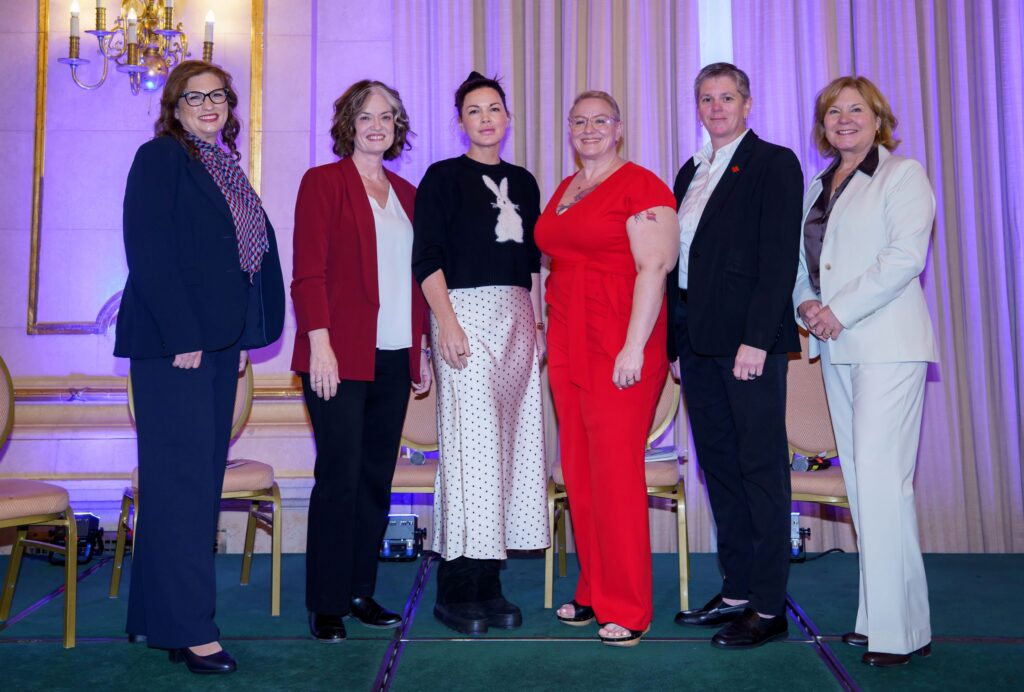
At our Western Women with Drive event in Winnipeg on November 12, I had the pleasure of moderating a leadership panel featuring Jackie Charles, Chief Administrative Officer, Arrow Group of Companies; Leah Mawer, Vice President, Human Resources, Caron Transportation Systems; Sherry Mossman, President, Northern Resource Trucking; Pauline Wiebe Peters, Vice President of Finance & Administration, Payne Transportation Ltd.; and Kelly Singleton, Director of Supply Chain, Price Industries.
What made this conversation so valuable was the candour. These leaders shared their difficult experiences, practical solutions, and the recent lessons that changed how they lead. There was laughter, but also thoughtful reflection and plenty to take back to our workplaces.
We covered economic uncertainty, technology, and workforce development. Throughout, we kept returning to the importance of clear, transparent communication: explaining decisions, listening carefully, and giving people the support they need to succeed.
Build understanding from day one
Sherry Mossman shared an onboarding practice that has benefits well beyond job orientation.
Every new employee, regardless of position, spends their first two weeks moving through the organization’s different functions. They learn alongside colleagues in dispatch, payroll, HR, and safety, so they understand everyone’s responsibilities and how the work connects.
They also build relationships. When questions arise later, they already have a connection and know who to ask.
Sherry described similar openness with customers, whom she calls partners. She shares operating costs to help explain pricing decisions, which creates a strong basis for working through pressures together.
Both examples show the value of giving people the information they need to understand the business and their place within it.
Account for the human cost of change
Jackie Charles described a system transition that lasted three and a half years, including an extended period when the old and new systems were running together.
During that time, employees were learning new processes and maintaining existing ones, all while keeping daily operations moving. The workload and fatigue were significant.
Her experience raised questions every employer should ask: Are our people ready? Where will the additional capacity come from? When will employees have an opportunity to catch their breath?
Jackie also told us that she deliberately speaks last in meetings. This provides an opportunity for a variety of perspectives to be shared, not just agreement with leadership.
Both examples reinforced the importance of considering how leadership decisions affect people’s ability to contribute.
Give employees room to solve problems
Leah Mawer shared lessons from a difficult HR and payroll system rollout.
It had been challenging to get buy-in, not only because implementation responsibilities had been added to already full workloads for staff. She learned her staff needed dedicated support, patience, and more time to learn and get comfortable using the new system.
Leah emphasized enabling change: if they had given employees practical tools and support to make the change happen, then the rollout would have been easier.
She also described the times she stepped out of implementation discussions so frontline employees could speak freely and develop solutions without deferring to the senior person present.
That example stayed with me. Asking for employee input is one step. Creating the conditions for honest answers requires deliberate attention.
Make communication useful
Pauline Wiebe-Peters shared how employee feedback had prompted a rethink of internal communications.
Employees wanted better communication, but the solution was not long, dense updates that no one was reading. Her organization began using AI to help create shorter, more visual messages that were easier to absorb.
It was a useful reminder that sending information does not guarantee understanding. Will people read it? Is the message clear? Do they know what to do with the information?
Pauline also reflected on her own evolution as a leader: moving from a strong focus on finance and processes toward a greater emphasis on people and mentorship.
Together, her examples highlighted the importance of understanding the employee experience. Effective communication starts with considering what people need, rather than simply what we want them to know.
Build relationships before you need them
Kelly Singleton illustrated the value of relationships in the workplace; they became an important part of the response to a cyberattack that shut down their computer systems.
Transportation partners came into the company’s office to help employees prepare shipping documents manually. It was their practical knowledge and willingness to help that kept freight moving, and that was only possible because personal and professional connections had been built long before the crisis.
Kelly also outlined how their office is arranged so that experienced and newer colleagues sit near one another. This encourages everyday engagement, sharing, and learning — including operational judgement and technology skills.
Her advice to emerging professionals was equally practical: pick up the phone, speak directly with colleagues, and work on building relationships with suppliers and carriers.
Technology supports the work. But people still need to know who to call, how to ask for help, and how to solve problems together.
Help women see a future in the sector
Our discussion also explored attracting more women and supporting their careers.
Kelly described student placements as a pathway into supply chain work, including an employee who progressed from summer placement to an analyst role, and then into management.
Leah emphasized clear career paths, mentorship, and regular feedback, including for women entering operational and technical roles.
Sherry brought attention to personal safety with a story about a woman driver who would shower at one truck stop, then move elsewhere to sleep so those who had seen her alone would not know which truck she was in.
All these examples reinforce the importance of listening directly to women, addressing practical barriers, and showing them where their career can lead. The five women on our panel made leadership possibilities visible — and made them feel possible.
Put the lessons to work
What stayed with me most was how practical all the examples were: a newcomer learns each function, a leader waits before speaking, an employer changes its messages after hearing employee feedback.
I appreciate how open and honest Jackie, Leah, Pauline, Sherry, and Kelly were with sharing their experiences so openly.
These are the conversations that make Women with Drive valuable — honest exchanges that leave us all with ideas we can put to work.
The next Women with Drive event takes place on March 11, 2027 in Toronto.
Restez au courant!
Abonnez-vous à notre infolettre pour recevoir chaque semaine les plus récentes données, nouvelles, histoires et annonces d’événements directement dans votre boîte de réception.