


All resources
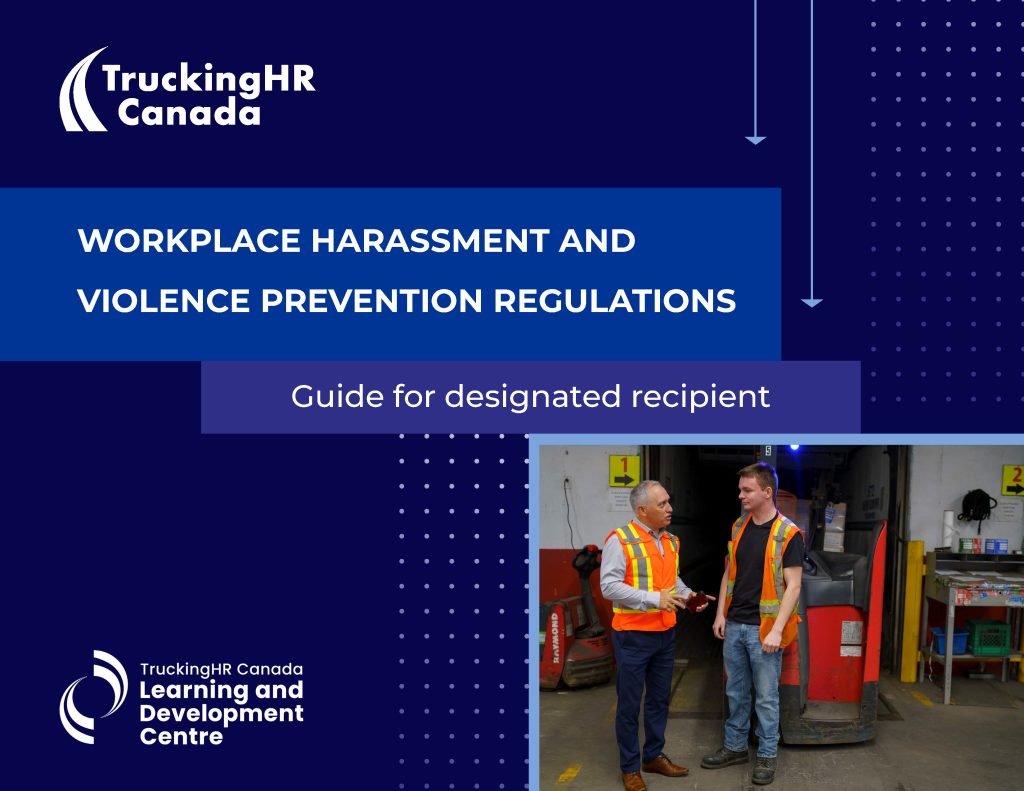
Workplace harassment and violence prevention regulations – Guide for designated recipient
Select and support the right Designated Recipient for workplace harassment and violence complaints. This guide helps federally regulated trucking and logistics employers understand the role, responsibilities, required competencies, candidate options, training considerations, and best practices for impartial, confidential, and effective complaint response.
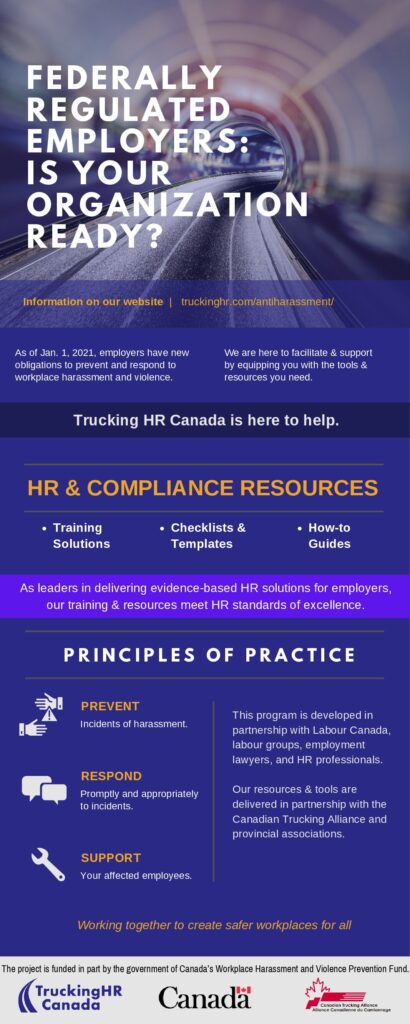
Anti-Harassment Infographic
Explore THRC’s anti-harassment resources for federally regulated trucking and logistics employers. This infographic highlights practical tools to help employers prevent, respond, and support workplace harassment and violence prevention efforts.
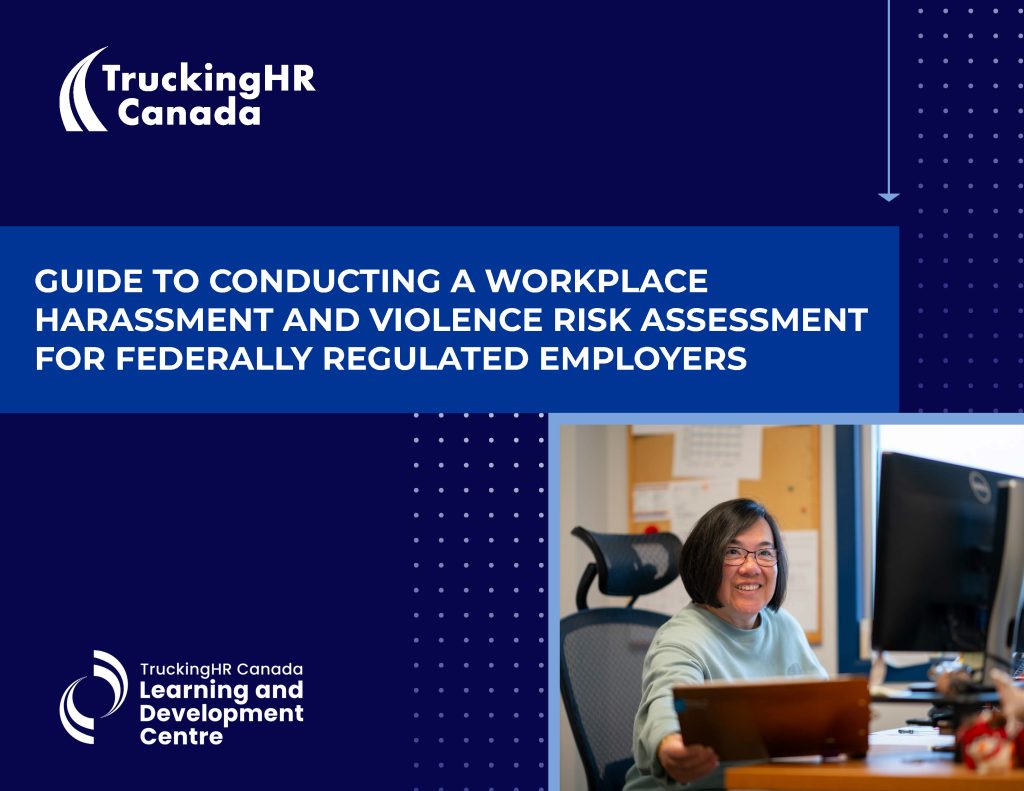
Guide to conducting a workplace harassment and violence risk assessment
Assess workplace harassment and violence risks with a practical checklist. This resource helps federally regulated trucking and logistics employers work with their Applicable Partner to identify risks, evaluate controls, recommend preventive measures, communicate risks, and monitor and review workplace risk assessments over time.
Preventing workplace harassment and violence – A toolkit for trucking and logistics employers
Implement workplace harassment and violence prevention policies with confidence. This checklist helps federally regulated trucking and logistics employers review required policy elements, work with the Applicable Partner, conduct risk assessments, communicate the policy, train employees, support ongoing review, and maintain required records.
Workplace Harassment and Violence Prevention Policy Template
Build a clear workplace harassment and violence prevention policy. This template helps federally regulated trucking and logistics employers address Bill C-65 requirements, including prevention commitments, definitions, roles and responsibilities, risk assessment, training, emergency procedures, reporting, resolution, investigations, privacy, support measures, reprisals, and policy review.
Bridging the Gap in Alberta’s Trucking and Logistics Labor Market: Transportation Guide
Explore career pathways in Alberta’s trucking and logistics sector. This Transportation Guide introduces students, job seekers, career counsellors, workforce partners, and employers to opportunities in transportation maintenance, transportation operations, warehouse and yard operations, and commercial vehicle operation while supporting workforce attraction and outreach to under-represented groups.
Supervisor – Physical Demands Assessments (PDAs)
Understand the physical, postural, sensory, psychological, and mental demands of supervisor, manager, and foreperson roles in trucking and logistics. This Physical Demands Assessment helps employers review essential job functions, employee supervision, HR and administrative duties, workstation demands, potential accommodations, and inclusive practices to support safer, more accessible workforce planning.
Shunt Driver – Physical Demands Assessments (PDAs)
Understand the physical, postural, sensory, psychological, and mental demands of licensed shunt driver roles in trucking and logistics. This Physical Demands Assessment helps employers review essential job functions, trailer preparation, yard checks, shunting, coupling and uncoupling tasks, vehicle maintenance, licensing considerations, PPE, potential accommodations, and inclusive practices to support safer, more accessible workforce planning.
Safety and Loss Prevention Specialist – Physical Demands Assessments (PDAs)
Understand the physical, postural, sensory, psychological, and mental demands of safety and loss prevention specialist roles in trucking and logistics. This Physical Demands Assessment helps employers review essential job functions, safety program duties, inspections, incident investigations, strength requirements, mobility demands, PPE, potential accommodations, and inclusive practices to support safer, more accessible workforce planning.
Heavy Equiptment Mechanic – Physical Demands Assessments (PDAs)
Understand the physical, postural, sensory, psychological, and mental demands of heavy duty equipment technician roles in trucking and logistics. This Physical Demands Assessment helps employers review essential job functions, truck and trailer inspections, diagnostics, repairs, maintenance tasks, strength requirements, tool and equipment use, PPE, potential accommodations, and inclusive practices to support safer, more accessible workforce planning.